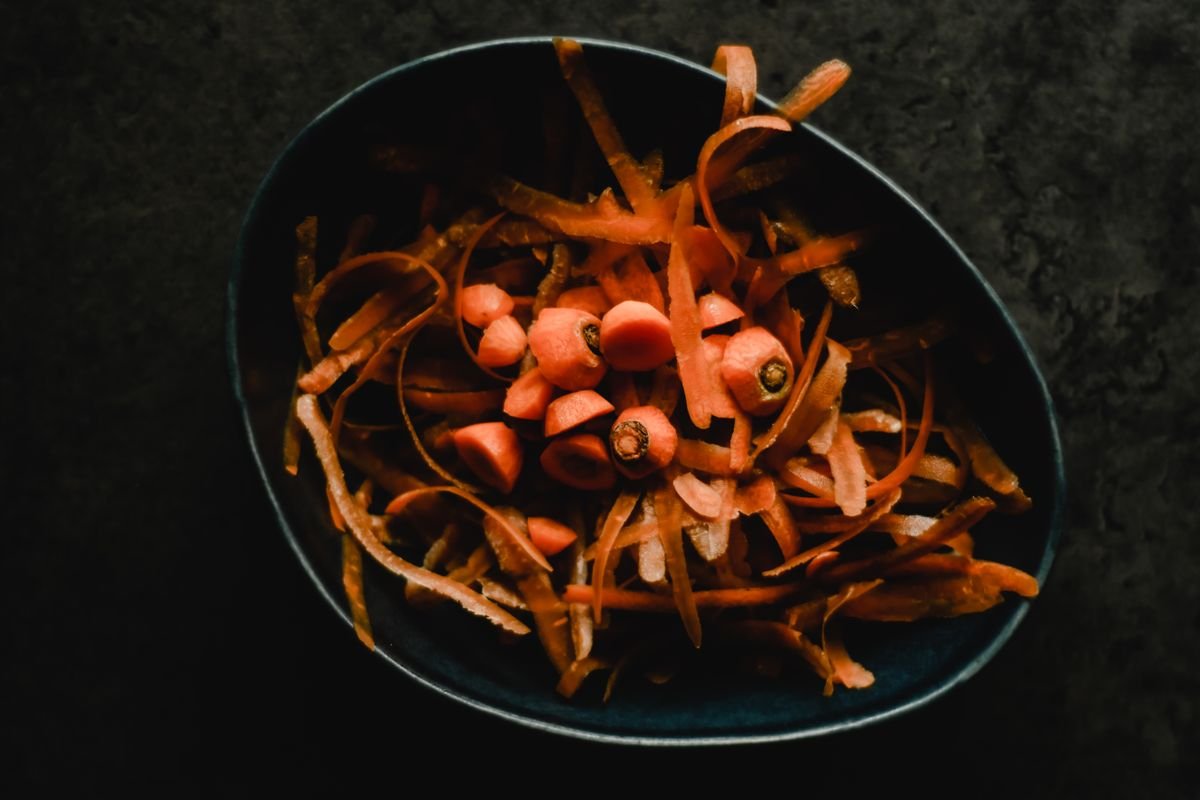

A carrot top used to go straight in the trash, alongside broccoli stalks, citrus peels, and the outer leaves of a head of lettuce. Root-to-stem cooking treats all of that as ingredients rather than waste, and it’s moved from a niche chef’s technique into something considerably more people are trying at home.
What Root-to-Stem Cooking Actually Means
The core idea is simple, using the entire vegetable or fruit rather than just the conventionally “edible” portion most recipes call for. Carrot tops become pesto, broccoli stalks become slaw, citrus peels become candied garnish or infused syrup. None of this requires exotic technique, mostly just a shift in what gets treated as usable in the first place.
Why This Approach Is Gaining Traction Now
- Rising grocery costs — getting more usable food out of the same purchase has genuine financial appeal beyond any environmental motivation
- Food waste awareness — growing public attention to how much edible food gets discarded has made root-to-stem cooking feel like a practical, low-effort response
- Chef-driven visibility — restaurants building entire tasting menus around minimal waste have popularized techniques that home cooks are now adapting
- Flavor discovery — many “discarded” parts turn out to have genuine culinary value, not just a virtuous use for scraps
Parts Worth Rethinking
Carrot and beet tops make a genuinely good pesto substitute, slightly more bitter than basil but perfectly workable. Broccoli and cauliflower stalks, once peeled, are essentially a different vegetable entirely, sweeter and crunchier than the florets most people default to using. Watermelon rind pickles are a longstanding tradition in some culinary cultures that’s recently found a broader audience. Citrus peels, dried or candied, add genuine flavor complexity that the fruit alone doesn’t provide.
A Personal Shift in the Kitchen
I started saving vegetable scraps almost by accident, initially just to make stock, and gradually started noticing how much genuinely usable food had been going straight into the compost bin for years. A broccoli stalk slaw one week and a batch of carrot-top pesto the next turned what felt like a sustainability chore into something closer to genuine culinary curiosity.
Where This Approach Has Real Limits
Not everything typically discarded is actually worth using, some parts genuinely are inedible, tough, or unpleasant regardless of technique, and treating root-to-stem cooking as an absolute rule rather than a general mindset can lead to forcing unpalatable results simply out of principle. The goal is using more of what’s genuinely usable, not eliminating all kitchen waste entirely.
Building the Habit Without Overcomplicating It
Starting with a single, simple swap, saving vegetable scraps for stock, or trying one new use for a commonly discarded part, tends to build the habit more sustainably than an ambitious overhaul of an entire cooking routine at once. Over time, checking whether a specific part is usable becomes a fairly automatic part of meal prep rather than an extra deliberate step.
FAQ
Is root-to-stem cooking mostly about saving money?
Financial savings are a real factor for many home cooks, though reducing food waste and discovering genuinely enjoyable new flavors are equally common motivations cited by people who adopt the approach.
Are all vegetable scraps safe and worth using?
No, some parts are genuinely tough or unpalatable regardless of preparation. The approach works best as a general mindset toward using more of what’s usable, not a strict rule applied to every single scrap.
What’s an easy first step for trying root-to-stem cooking?
Saving vegetable scraps in the freezer for homemade stock is a low-effort, low-risk starting point that most people find genuinely useful without requiring any new technique.
Conclusion
Root-to-stem cooking doesn’t ask for a dramatic kitchen overhaul, just a slightly different default question when prepping a vegetable, is this part actually usable? For a lot of home cooks, the answer turns out to be yes considerably more often than they’d assumed.