
Reach for the last piece on a shared plate and you might be doing something completely normal, or you might be breaking an unspoken rule that everyone else at the table learned as a child. Food etiquette varies so widely across cultures that a gesture meant as generosity in one place can read as rude somewhere else entirely.
Most of these rules never get written down. They’re absorbed, not taught, which is exactly why they trip up travelers and dinner guests who think politeness looks the same everywhere.
Who Serves First, and Why It Matters
In many East Asian dining traditions, the eldest person at the table is served first, or at minimum, everyone waits until they begin eating before anyone else touches their food. Skipping this isn’t just casual, it can read as a lack of respect for the entire family structure at the table.
Compare that to more informal Western potlucks, where grabbing a plate the moment food hits the table is often expected, sometimes even encouraged as a compliment to the cook. Neither approach is more “correct.” They’re just built around different values, hierarchy versus casual abundance.
The Last Bite Problem
Few things reveal cultural difference faster than the last piece of food on a communal plate. In several Middle Eastern and Mediterranean traditions, leaving a small amount of food signals that you’ve been given enough, a subtle compliment to the host’s generosity. Finishing everything can accidentally suggest you weren’t given enough to eat.
Flip that in many other cultures, where finishing your plate is the compliment, and leaving food behind can look wasteful or even insulting. I once left food on my plate at a dinner trying to be polite by local custom, only to realize halfway through that I had the wrong country’s rule in mind. My host kept offering more, worried I hadn’t been fed properly.
Hands, Utensils, and What Counts as Proper
- Eating with your right hand only — common across parts of South Asia, the Middle East, and Africa, where the left hand carries specific cultural associations
- Chopstick placement — never stuck upright in rice in several East Asian cultures, since the gesture resembles funeral rituals
- Bread as a utensil — used to scoop food directly in parts of the Middle East and Ethiopia, replacing forks entirely
- Passing dishes with two hands — a sign of respect in several Asian dining customs, rather than a casual one-handed pass
Communal Plates vs. Individual Portions
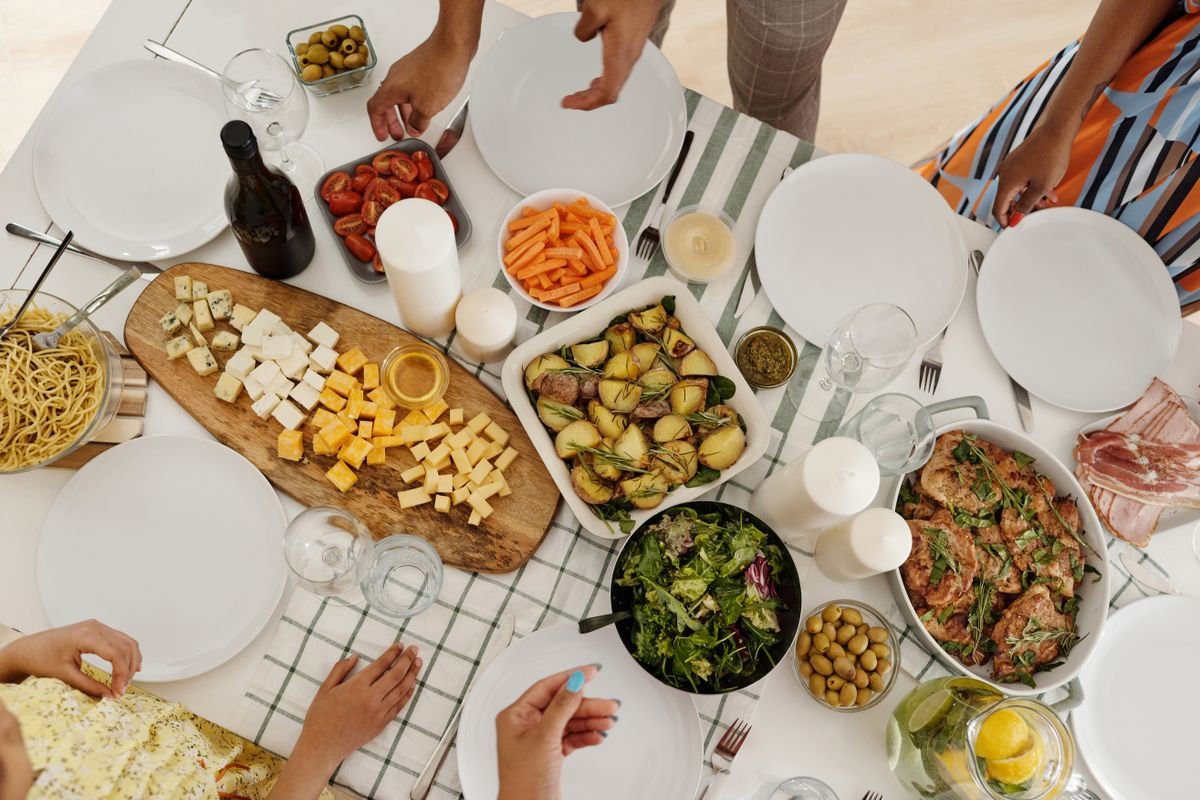
Some food cultures build meals entirely around shared plates at the center of the table, everyone reaching in with their own utensil or hands. Others treat that as unhygienic or overly casual, preferring individually portioned meals from the start.
Neither approach is inherently more polite. The discomfort usually comes from unfamiliarity, not from either method actually being wrong. It’s worth remembering that the next time a shared plate feels strange.
Why This Still Matters When Eating at Home
Understanding these differences isn’t only useful for travel. Multicultural households and friend groups navigate this constantly, blending habits from different backgrounds into something that works for everyone at their own table. A little awareness goes a long way toward making guests feel comfortable rather than watched.
FAQ
Why do some cultures consider it rude to finish everything on your plate?
Leaving a small amount of food can signal that a host provided more than enough, functioning as a compliment rather than waste. This custom is especially common in parts of the Middle East and Mediterranean.
Is it always disrespectful to eat before the eldest person at the table?
Not universally, but in many East Asian and some other traditions, waiting for the eldest to begin eating is a sign of respect tied to family hierarchy, and skipping it can be seen as impolite.
What’s the safest general rule when eating in an unfamiliar culture?
Watch what the host or most experienced person at the table does before acting, and don’t be afraid to ask directly. Most hosts appreciate the question far more than a guest silently guessing and getting it wrong.
Conclusion
None of these customs are about being difficult. They’re small, specific ways different cultures express respect, generosity, and hospitality around a shared table. Paying attention to them isn’t a formality, it’s one of the simplest ways to actually understand a place through its food instead of just tasting it.