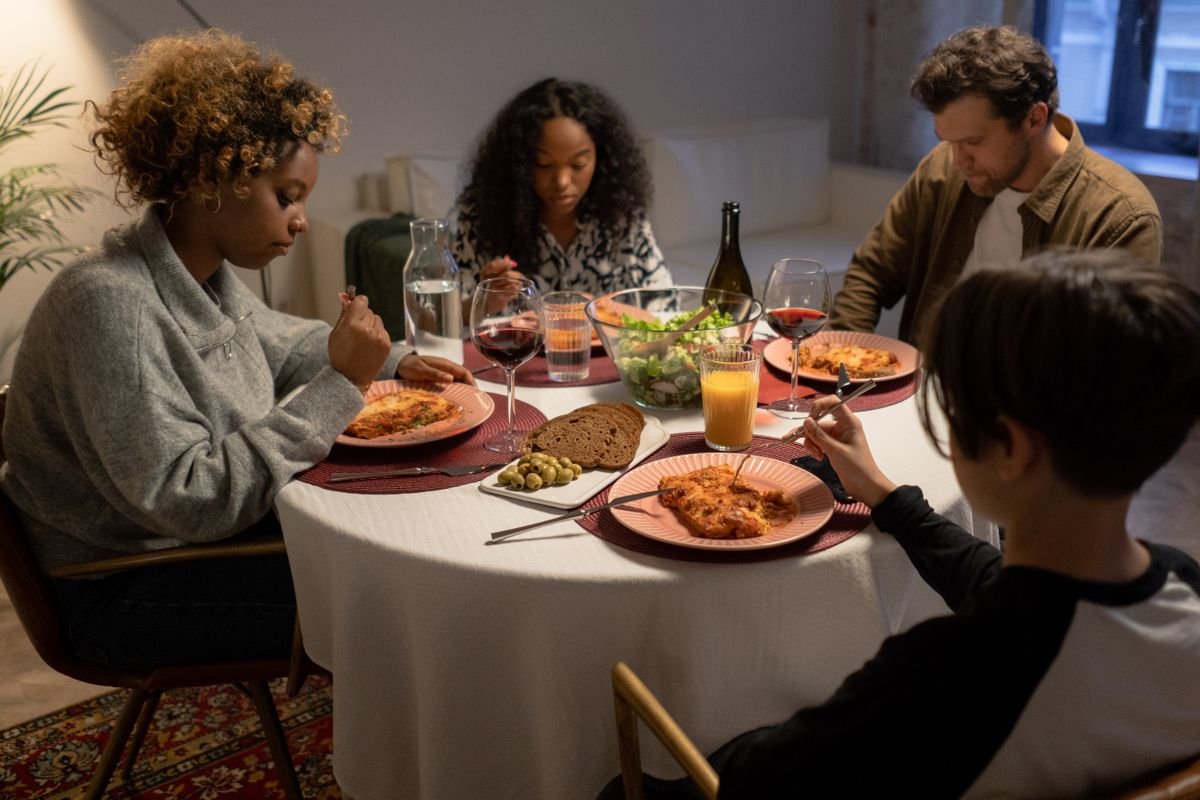

A specific meal, a specific day, a specific table, repeated week after week for years. Sunday family dinners have survived considerably longer than a lot of household rituals, and even as family schedules have grown busier and more fragmented, this particular tradition keeps getting deliberately protected rather than allowed to quietly disappear.
Why This Particular Ritual Endures
Sunday dinner’s staying power comes largely from its predictability, a fixed, recurring commitment that doesn’t require constant renegotiation the way spontaneous gatherings do. Families who successfully maintain this tradition generally describe it less as an event requiring active planning each week and more as a fixed point everyone already knows to expect, considerably reducing the coordination effort compared to arranging a new gathering from scratch every time.
What Makes Sunday Dinner Different From Other Family Meals
- Deliberate time investment — unlike a rushed weeknight dinner, Sunday meals often involve genuinely longer cooking and lingering at the table afterward
- Extended family inclusion — many households use this specific meal to include grandparents, adult siblings, or extended family who wouldn’t otherwise gather as regularly
- Consistent, expected attendance — the recurring nature builds an implicit expectation of presence that more casual, spontaneous invitations don’t carry as strongly
- A buffer before the coming week — positioned at the transition between weekend and week ahead, it often functions as a natural reset point for the whole family
A Personal Account of Protecting This Tradition
My own extended family has maintained a version of Sunday dinner for well over a decade now, surviving job changes, moves, and considerably busier schedules than existed when it started. What’s kept it alive isn’t any single person’s effort, it’s become something the whole family simply protects by default, other plans get scheduled around it rather than the reverse, a small but genuinely significant shift in priority that took years to fully solidify.
The Difference Between a Ritual and a Recurring Event
What distinguishes Sunday dinner from simply eating together occasionally is the specific, repeated structure, same rough time, similar format, an implicit shared understanding of what the gathering actually is. This structure appears to matter considerably for why it survives long-term, a genuine ritual carries more weight and expectation than an equally frequent but less clearly defined gathering.
Navigating Busy Schedules Without Abandoning the Tradition
Families who successfully maintain this practice despite genuinely demanding schedules often describe deliberate flexibility around the specific details, adjusting timing, simplifying the meal itself when needed, rather than treating the tradition as all-or-nothing. Protecting the core gathering while remaining flexible about exactly what gets served or precisely what time it starts tends to sustain the practice better than an inflexible standard that eventually becomes impossible to maintain consistently.
What Happens When the Tradition Lapses
Families who’ve let Sunday dinner lapse, then attempted to restart it later, often describe genuine difficulty rebuilding the same level of consistent attendance and priority it previously held. This suggests the ritual’s strength comes substantially from its unbroken consistency, once that consistency breaks, rebuilding the same level of expectation and priority requires considerably more deliberate effort than simply maintaining an existing, unbroken pattern.
The Role of Food Itself Within the Ritual
While the meal itself matters, many families describe the specific food as considerably less important than the gathering it anchors, some families rotate dishes regularly, others maintain a fairly consistent, repeated menu across years. What appears to matter most is having a shared, recognizable anchor around which the gathering consistently occurs, rather than any specific culinary tradition itself.
Why Younger Family Members Often Value This More Than Expected
Interestingly, younger family members, including adult children who’ve moved out and built independent lives, frequently describe Sunday dinner as one of the family traditions they most actively want to maintain and eventually pass on themselves, despite not having chosen the tradition initially as children. This suggests the ritual’s value becomes more apparent with some distance and independent perspective, rather than only being appreciated by the generation that originally established it.
Adapting the Tradition Across Life Changes
Marriages, moves, new children, and changing family composition all require Sunday dinner to genuinely adapt over time rather than remaining perfectly fixed. Families who maintain this tradition longest tend to treat these adaptations as natural evolution rather than a threat to the ritual’s core value, the specific format changes, but the underlying commitment to gathering regularly persists.
FAQ
Why do Sunday family dinners survive better than other family gathering traditions?
The predictable, recurring nature reduces the coordination effort required compared to spontaneous gatherings, and the consistency itself builds a stronger implicit expectation of attendance over time.
What happens if a family’s Sunday dinner tradition lapses for a while?
Many families report genuine difficulty rebuilding the same level of consistent attendance and priority after a lapse, suggesting the ritual’s strength depends significantly on unbroken, ongoing consistency rather than being easy to simply restart later.
Does the specific meal served matter for maintaining this tradition?
Generally less than the consistency of the gathering itself. Many families rotate what’s served regularly, with the shared, recurring occasion mattering more than any specific culinary tradition attached to it.
Do adult children who’ve moved out still value this family tradition?
Many report actively wanting to maintain and eventually pass on this specific tradition themselves, often appreciating its value more with independent adult perspective than they did as children within the household.
Conclusion
Sunday family dinner endures not because any single meal is particularly remarkable, but because the consistency itself becomes genuinely valuable over time, a protected, predictable anchor point that families increasingly have to deliberately defend against an otherwise fragmented, unpredictable schedule. For families who’ve kept it alive, that protection tends to feel like effort well spent.


