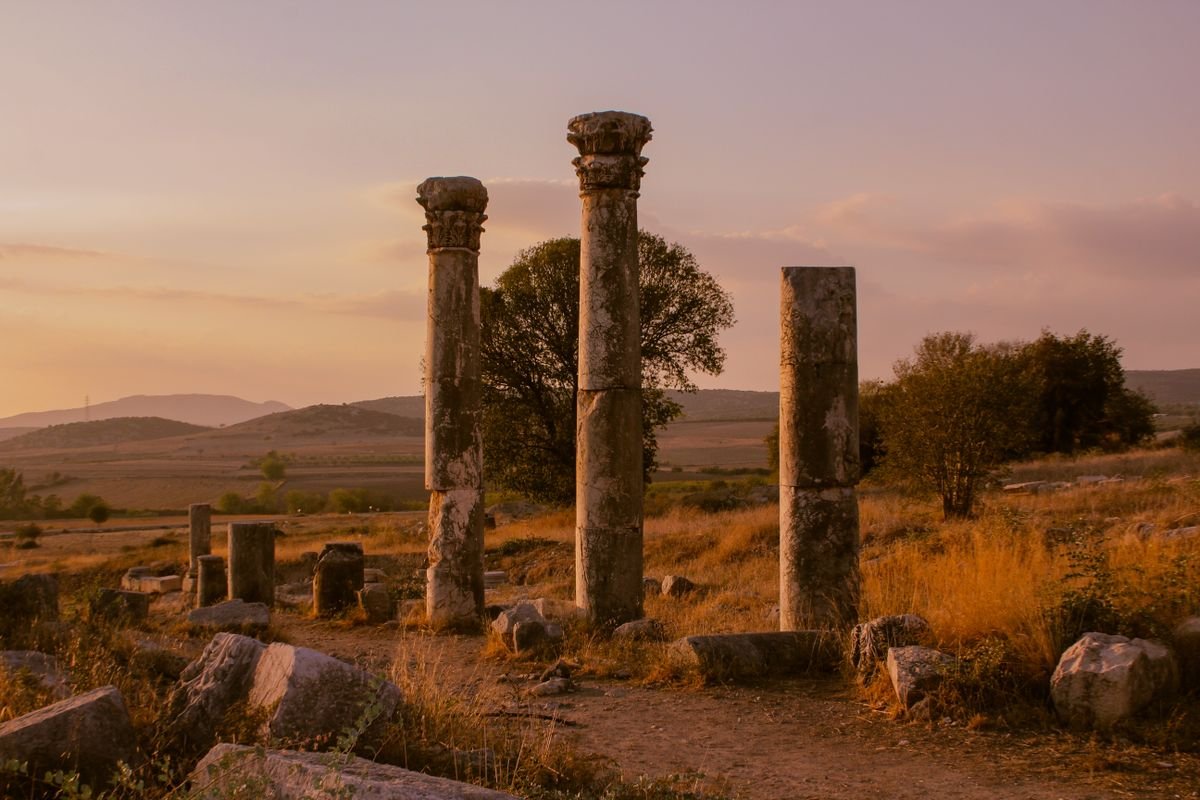

Machu Picchu receives over a million visitors a year despite requiring a genuinely demanding journey to reach. The Colosseum draws millions more despite being, structurally, a two-thousand-year-old ruin rather than anything resembling a functional building. Something about crumbling, abandoned, or partially destroyed structures pulls people toward them with a consistency that spans nearly every culture and historical period, and the psychological and historical reasons behind that pull turn out to be considerably more specific than simple curiosity about the past.
The Aesthetic Category That Predates Modern Tourism Entirely
Fascination with ruins isn’t a modern tourism phenomenon, it has a genuinely long intellectual and aesthetic history. Eighteenth-century European culture developed an entire formal aesthetic category around ruins, sometimes called “ruin lust” by later historians, wealthy travelers on the Grand Tour specifically sought out crumbling classical sites in Italy and Greece, and some estate owners went so far as to commission entirely artificial ruins, structures built from scratch to look ancient and decayed, purely for their aesthetic and contemplative effect on a landscape.
This deliberate construction of fake ruins reveals something important, the appeal clearly wasn’t purely historical or educational, since an artificial ruin carries no genuine historical information at all. The appeal was something else entirely, a specific aesthetic and emotional quality that decay and partial destruction provide, regardless of whether the ruin is genuinely ancient or deliberately manufactured to look that way.
The Psychological Concept Researchers Use to Explain This Draw
- Mortality salience and existential reflection — ruins make the passage of time and the impermanence of even the grandest human achievements viscerally, physically apparent in a way abstract contemplation rarely manages
- The sublime, as a specific aesthetic category — philosophers dating back centuries identified a distinct aesthetic response, combining awe, slight unease, and genuine beauty, that ruins and vast, overwhelming natural landscapes both reliably trigger
- Imaginative reconstruction as active engagement — unlike a fully intact historical building, a ruin requires the viewer to actively imagine what’s missing, engaging the mind in genuine, effortful reconstruction rather than passive observation
- Nostalgia for eras never personally experienced — researchers have identified a genuine phenomenon of “anemoia,” nostalgia for a time or place one never actually lived through, which ruins seem to trigger with particular intensity
This last concept, anemoia, deserves particular attention since it explains why ruins from civilizations entirely unconnected to a visitor’s own heritage, a European visitor at Angkor Wat, for instance, or an Asian visitor at Roman ruins, still produce genuine, powerful emotional responses despite no direct cultural or ancestral connection to the specific site being visited.
A Personal Account of Standing in a Genuinely Ancient Space
Visiting a partially excavated ancient site, considerably less famous and crowded than the major tourist destinations, produced an emotional response I hadn’t fully anticipated going in. Standing in a space where ordinary daily life had genuinely occurred many centuries ago, markets, homes, routine activity, now reduced to stone foundations and scattered fragments, created a specific, somewhat disorienting sense of time collapsing that no museum display case, however well curated, had ever quite managed to produce for me. The site’s genuine, rough incompleteness, rather than a fully reconstructed or idealized version, seemed to be precisely what made that feeling possible.
Why Partial Destruction Specifically, Rather Than Pure Ruin or Full Preservation
Researchers studying aesthetic responses to ruins have found that sites in a specific intermediate state, genuinely decayed and incomplete, but still recognizably structured enough to suggest their original form, tend to produce the strongest emotional and aesthetic response. A site reduced to entirely unrecognizable rubble doesn’t trigger the same reaction, nor does a fully reconstructed, pristine replica. This suggests the specific appeal lies in that active tension between presence and absence, what remains visible alongside what the mind must actively supply through imagination to complete the picture.
How This Connects to Broader Dark Tourism Conversations
Ruins tourism shares genuine conceptual overlap with broader “dark tourism,” travel specifically to sites associated with death, tragedy, or difficult history, though the two categories aren’t identical. Ancient ruins often carry considerably more emotional distance than dark tourism sites tied to recent, specific tragedy, allowing visitors to engage with themes of loss and impermanence in a more contemplative, less acutely painful way than a site tied to living memory or recent atrocity would allow.
This distinction matters for understanding why ancient ruins tourism faces relatively little of the ethical scrutiny that more recent dark tourism sites often generate, the temporal distance provides a kind of emotional buffer that makes the aesthetic and contemplative engagement feel appropriate rather than exploitative in a way it might at a site of more recent, specific suffering.
The Genuine Tension Between Preservation and Authentic Decay
Heritage preservation presents a real, ongoing dilemma specifically connected to this psychological appeal, preserving a ruin to prevent further deterioration and protect it for future visitors inevitably changes its character, often reducing precisely the quality of genuine, visible decay that draws visitors in the first place. Some preservation approaches favor minimal, structural-only intervention specifically to maintain this authentic character, while others favor more extensive restoration aimed at better conveying historical and educational information, even at some cost to that raw, decayed aesthetic quality.
This tension reflects a genuine, difficult tradeoff without an obviously correct resolution, between protecting a site’s physical integrity for long-term preservation and maintaining the specific aesthetic and emotional qualities that made it compelling to visitors and worth preserving in the first place.
Why Some Civilizations Deliberately Built to Eventually Ruin Well
It’s worth noting something genuinely interesting about construction choices across history, certain architectural traditions, Roman concrete construction being a notable example, were built with such durability that their ruins remain structurally striking many centuries later, while other historical structures built from less durable materials have left little or no ruin at all, simply vanishing entirely rather than leaving the kind of evocative partial remains that draw modern visitors. This means the ruins tourism we experience today is shaped considerably by ancient material and engineering choices, an accident of durability as much as any deliberate intention to create a lasting, visitable monument.
What Ruins Reveal About a Society That Modern Monuments Often Don’t
Beyond pure aesthetic and psychological appeal, ruins often reveal genuine, granular historical detail that polished, curated historical presentations sometimes obscure, the actual layout of ordinary homes, evidence of daily routine and labor, physical traces of how specific spaces were genuinely used, rather than only the grand, ceremonial narrative a more formal historical site or museum might emphasize. This granular, physical evidence provides historians and genuinely curious visitors alike with a different, often more intimate window into daily historical life than textual records alone typically provide.
FAQ
Why do ruins produce such a strong emotional response in visitors?
Researchers point to several factors, including mortality salience, a sense of the sublime, and the active imaginative reconstruction a ruin requires compared to a fully intact or fully destroyed site, all combining to produce genuine, often unexpected emotional intensity.
What is “anemoia,” and how does it relate to ruins tourism?
Anemoia refers to nostalgia for a time or place one never personally experienced, a phenomenon that helps explain why ruins from entirely unrelated civilizations and cultures still produce powerful, genuine emotional responses in visitors with no direct ancestral connection to the site.
Why did some wealthy estate owners build fake, artificial ruins centuries ago?
This reflects the specifically aesthetic and contemplative appeal of ruins, separate from any genuine historical information, demonstrating that the emotional and visual quality of decay itself was valued independently of actual historical authenticity.
Does restoring a ruin for preservation reduce its emotional appeal to visitors?
Often yes, research suggests sites in a specific intermediate state of genuine, visible decay tend to produce the strongest response, meaning extensive restoration, while protecting a site physically, can reduce the particular aesthetic quality that originally drew visitors.
Conclusion
The pull toward ruins reflects something considerably deeper and more specific than simple historical curiosity, a genuine aesthetic and psychological response to decay, incompleteness, and the visible passage of time that spans cultures and centuries far more consistently than most other forms of travel motivation. For travelers who’ve felt that particular, hard-to-name feeling standing among old stones, the actual mechanism behind it turns out to be considerably more interesting than the simple “it’s old and impressive” explanation usually offered.