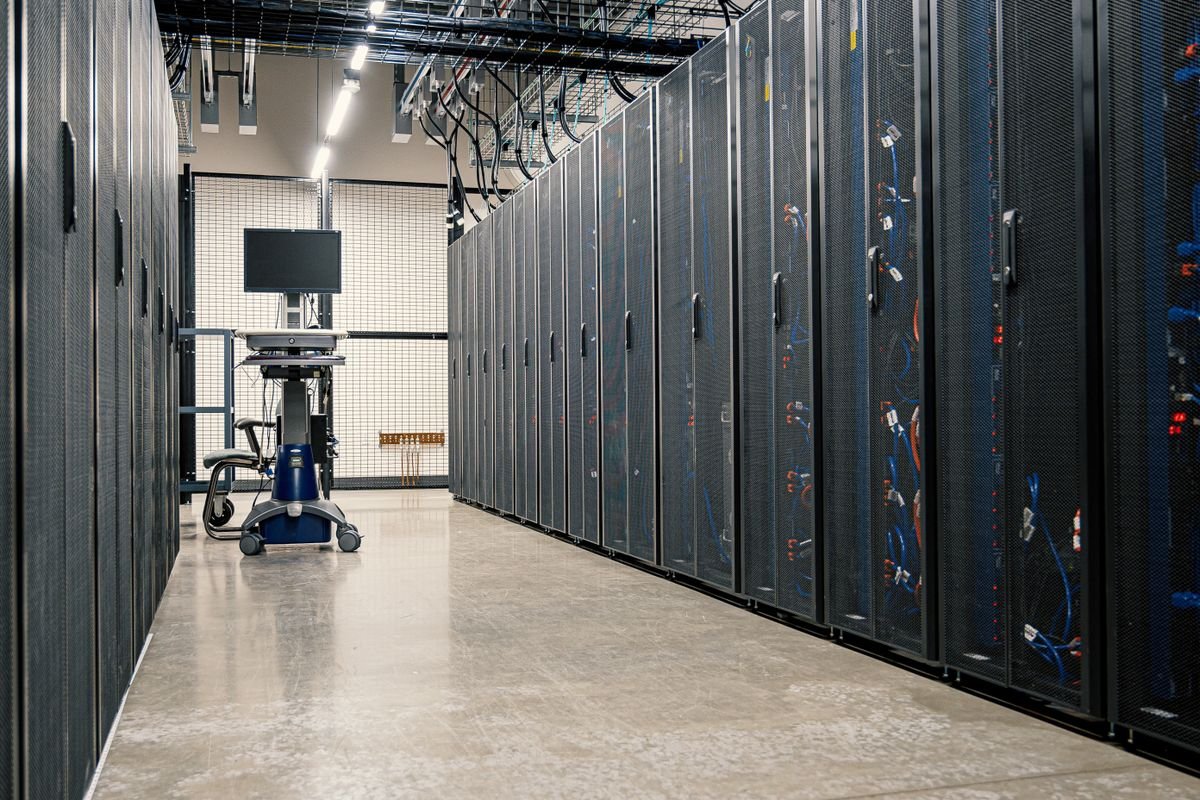

“The cloud” sounds weightless, almost poetic, like your photos and files float somewhere harmless above the actual world. In reality, every file synced, every backup made, every streamed show lives on a physical server, in a physical building, drawing real electricity and often real water for cooling. None of it is weightless at all.
This isn’t an argument against using cloud storage, which genuinely is useful and often more secure than local-only backups. It’s a case for understanding what’s actually happening behind that comforting little cloud icon.
What a Data Center Actually Is
A data center is, physically, a warehouse full of servers running continuously, generating substantial heat that must be constantly removed to keep the equipment functioning. Some data centers span the size of multiple football fields, housing thousands of servers running around the clock, every single day of the year, without pause.
Every email stored, every photo backed up, every document synced across devices lives on hardware inside one of these facilities somewhere in the world, consuming power whether or not anyone actively accesses that file on a given day.
The Electricity Numbers Behind “The Cloud”
Data centers collectively consume a substantial and growing share of global electricity, a figure that has climbed steadily as cloud storage, streaming, and increasingly AI computing demands have expanded. This isn’t a niche technical detail, it’s become significant enough that some regions have started factoring data center power demand directly into broader energy grid planning.
Cooling accounts for a huge portion of that energy use, arguably more than the actual data processing itself in many facilities. Keeping thousands of servers from overheating requires constant climate control, which is precisely why many large data centers are built in naturally cooler climates when geographically possible.
Water Usage Is the Less-Discussed Cost
- Evaporative cooling systems — many large data centers rely on water-based cooling that consumes millions of gallons annually per facility
- Local water competition — some data centers have faced community pushback in drought-prone regions over municipal water usage
- Indirect water costs — the electricity powering data centers often comes from power plants that themselves require water for cooling
- Growing scrutiny — several tech companies now publish water usage reports, though transparency and methodology vary significantly by company
This water dimension rarely makes it into conversations about cloud storage’s environmental footprint, largely because “the cloud” evokes something abstract and digital rather than a physical facility drawing from a local water supply.
Why Duplicate Files Matter More Than People Think
Cloud storage’s near-invisibility encourages a specific kind of digital hoarding. Photos backed up automatically across multiple services, duplicate files synced redundantly, old projects nobody’s opened in years sitting untouched but still occupying active server space. None of it feels like it costs anything because there’s no physical clutter forcing a decision to delete.
I went through my own cloud storage recently and found roughly 40 gigabytes of duplicate photos, the same images backed up across three separate services simultaneously, none of which I’d actually reviewed in years. Multiply that pattern across billions of users worldwide, and the redundant storage burden becomes genuinely significant at scale.
The Efficiency Argument in the Cloud’s Favor
It’s worth being fair here: large-scale data centers are often considerably more energy-efficient per unit of data stored than millions of individuals running personal servers or leaving old devices powered on continuously at home. Centralization allows for optimizations, better cooling systems, more efficient hardware utilization, that individual setups simply can’t match.
This means the comparison isn’t simply cloud storage bad, local storage good. It’s more nuanced: cloud storage is relatively efficient per file, but the sheer, ever-expanding volume of files being stored is what’s driving the overall environmental cost upward.
Streaming Adds Its Own Layer
Video streaming, now a dominant form of internet traffic globally, relies on the same data center infrastructure, plus the additional energy cost of transmitting that data across networks to individual devices. Higher resolution streaming, increasingly the default rather than the exception, requires proportionally more data transfer and processing.
This doesn’t mean streaming is uniquely villainous compared to other digital activities, but it does mean the “just streaming a show” mental framing understates the actual infrastructure being engaged behind that simple action.
What Tech Companies Are Actually Doing About It
Major cloud providers have made real investments in renewable energy sourcing and more efficient cooling technology, including underwater data centers and systems that use outside air in cooler climates instead of energy-intensive mechanical cooling. Some progress here is genuine, not purely marketing.
That said, overall data center energy demand continues climbing overall, partly driven by AI computing growth, meaning efficiency improvements per facility haven’t fully offset the sheer growth in total storage and processing demand across the industry as a whole.
What Individual Habits Can Actually Change
Deleting genuinely unused files, consolidating backups across fewer redundant services, and lowering unnecessary streaming resolution when watching on a smaller screen where higher resolution isn’t even visually noticeable, all represent small, low-effort changes with a real, if modest, cumulative impact at scale.
None of this places the burden entirely on individual users, infrastructure-level decisions matter far more in aggregate. But understanding the actual physical reality behind “the cloud” at least replaces a comforting abstraction with something closer to how the technology genuinely works.
FAQ
Does cloud storage really use a significant amount of electricity?
Yes, data centers collectively consume a substantial and growing share of global electricity, driven by increasing demand for cloud storage, streaming, and computing services worldwide.
Is cloud storage worse for the environment than storing files locally?
Not necessarily on a per-file basis. Large-scale data centers are often more energy-efficient than millions of individual local storage setups, though the sheer growing volume of data stored overall drives significant total energy and water use.
Why do data centers use so much water?
Many large data centers rely on evaporative cooling systems to manage the heat generated by constantly running servers, which can consume substantial amounts of water annually, particularly in facilities using older cooling technology.
Can deleting old files actually make a meaningful difference?
Individually, the impact is small, but at scale across billions of users storing redundant or forgotten files, reducing unnecessary storage contributes to lower overall energy and resource demand on data center infrastructure.
Conclusion
“The cloud” was always a marketing metaphor, not a physical description, and that gap between the metaphor and reality is exactly why its environmental cost stays so easy to ignore. Understanding what actually sits behind that little icon doesn’t require abandoning cloud storage, just approaching it with slightly more awareness than the weightless branding invites.