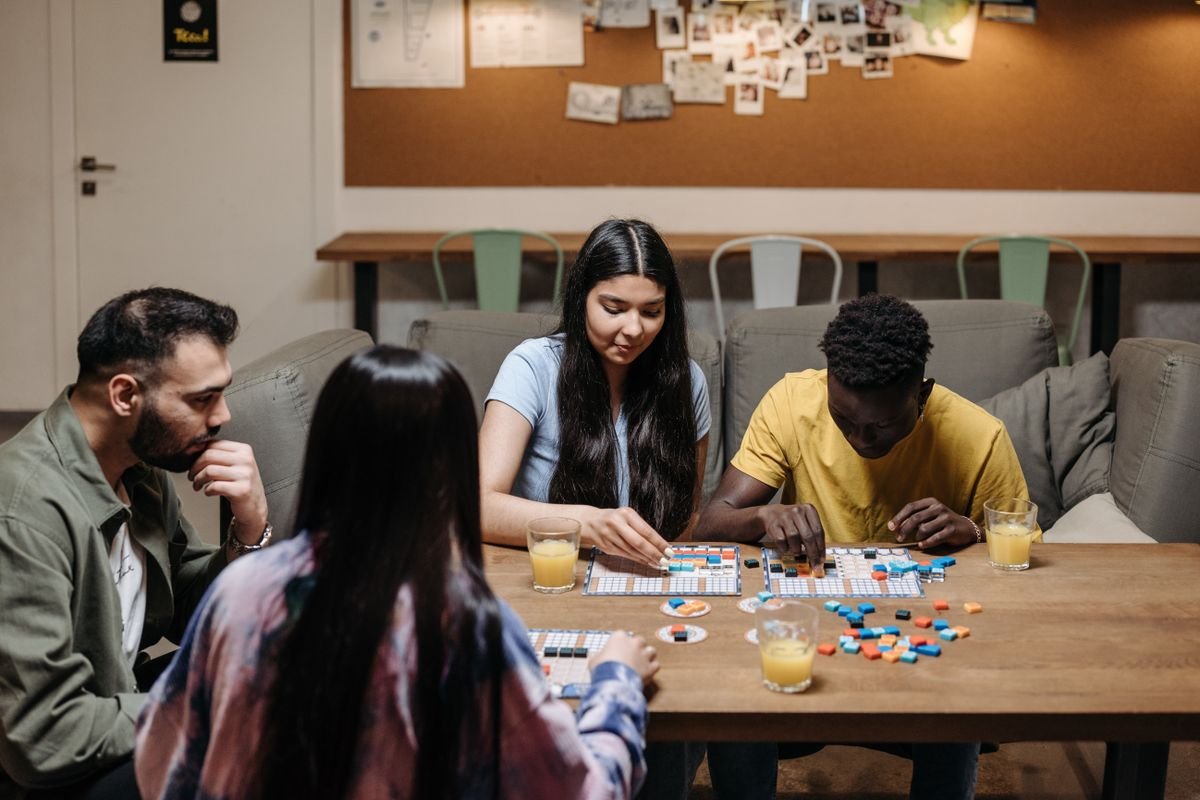

Board games spent a couple of decades treated as something largely reserved for children or the occasional rainy holiday afternoon, mostly forgotten in a closet the rest of the year. That’s changed considerably. Regular board game nights have become a genuine, deliberate social ritual for a lot of adults, and dedicated board game cafes have opened in cities that would have seemed an unlikely market for this specific kind of venue not long ago.
Why Board Games Specifically Made This Comeback
Board games occupy a particular social space that a lot of other entertainment options don’t, they require sustained, shared attention from everyone present, without the passive, screen-facing experience of watching something together, and without the constant phone-checking that tends to creep into more loosely structured social gatherings.
What Regular Game Nights Actually Provide
- Genuine, structured social interaction — the game itself gives a natural framework for conversation and interaction, reducing the awkwardness some people feel during entirely unstructured socializing
- Recurring, predictable gathering — similar to other recurring rituals, a regular game night reduces the coordination effort required for spontaneous, one-off gatherings
- Genuine screen-free time — most game formats naturally discourage phone use during active play, providing built-in structure that a lot of people struggle to maintain on their own
- Low-stakes competition and shared achievement — the mild competitive element provides genuine engagement without carrying serious real-world consequences
The Rise of Modern, Strategy-Focused Games
A significant driver behind this resurgence has been the growth of considerably more sophisticated modern board games, strategy games with genuine depth, cooperative games requiring real teamwork, and games designed specifically for adult audiences rather than simplified family editions. This modern game design has attracted a genuinely different audience than the classic board game aisle of previous decades, treating the hobby as a legitimate form of entertainment and strategic engagement rather than simply a children’s pastime.
A Personal Account of Building a Regular Game Night
A group of friends and I started a biweekly game night mostly as an experiment, uncertain whether it would sustain itself beyond a few initial sessions. Several years later, it’s become one of the most consistent social commitments in my calendar, considerably more reliable than looser plans that frequently get rescheduled or cancelled. The specific, recurring structure turned out to matter more than any individual game we happened to be playing.
Board Game Cafes as a New Kind of Social Venue
Dedicated board game cafes, offering large game libraries alongside food and drink, have opened in a growing number of cities, providing a structured, low-pressure venue specifically designed around this kind of gathering. These spaces have proven particularly appealing to people wanting to try games without owning an entire collection themselves, alongside providing a genuinely social, welcoming venue for people looking to meet others who share the specific interest.
Why This Appeals Particularly to Adults Feeling Socially Disconnected
Broader conversations about adult loneliness and difficulty maintaining friendships past a certain life stage have made structured social activities like regular game nights particularly appealing, they provide a specific, recurring reason to gather that doesn’t rely purely on spontaneous scheduling or an ambiguous, open-ended social invitation that’s easy to let slip.
The Cooperative Game Format’s Specific Appeal
Beyond traditional competitive games, cooperative board games, where players work together against the game itself rather than against each other, have grown considerably in popularity, offering a genuinely different social dynamic built around shared problem-solving rather than competition. This format has proven particularly appealing for mixed groups where competitive dynamics might otherwise create tension or discomfort among some participants.
How Game Selection Affects Group Dynamics
Experienced game night hosts often describe genuine skill in matching specific games to a particular group’s dynamics, some groups thrive on intense strategic competition, others prefer lighter, more social party-style games that prioritize conversation and humor over strategic depth. Understanding a specific group’s preferences, rather than defaulting to whatever game happens to be most popular generally, tends to sustain interest and attendance considerably better over time.
Building a Sustainable Regular Game Night
Groups that maintain game nights successfully over an extended period generally establish a consistent, predictable schedule early, rather than constantly renegotiating timing session by session. Rotating hosting responsibility, keeping the format flexible enough to accommodate occasional absences, and maintaining a relaxed rather than rigidly competitive atmosphere all appear to support long-term sustainability of the ritual.
FAQ
Why have board games become popular with adults again?
Modern, more sophisticated game design aimed specifically at adult audiences, combined with a broader desire for structured, screen-free social interaction, has driven renewed interest in board games as a genuine adult social activity.
What makes cooperative board games different from traditional competitive ones?
Cooperative games have players working together against the game itself rather than competing against each other, offering a different social dynamic built around shared problem-solving that some groups find more comfortable than direct competition.
How can I start a regular game night with friends?
Establishing a consistent, predictable schedule early, rather than renegotiating each time, along with selecting games suited to your specific group’s preferences, tends to support long-term sustainability of the tradition.
What is a board game cafe?
A dedicated venue offering a large library of board games alongside food and drink, allowing visitors to try various games without owning them, while providing a structured, social space for gathering and meeting other players.
Conclusion
Board game nights succeed at providing something a lot of modern social life struggles with, a genuine, structured reason to gather regularly, screen-free, without the ambiguity of open-ended plans that are easy to let slip. For groups who’ve built this into a lasting ritual, that structure has turned out to matter as much as whatever specific game ends up on the table.