
Ask most home cooks what makes a specific regional cuisine distinct, and the answer usually starts with a signature ingredient, saffron for Persian cooking, chili for Sichuan food, cumin for much of Mexican and Middle Eastern cuisine. That instinct isn’t wrong exactly, but it misses the bigger, more interesting truth. It’s rarely a single ingredient doing the work. It’s the specific combination, the spice blend, that actually defines a cuisine’s identity.
Why Blends Matter More Than Individual Spices
A single spice, used alone, tends to taste fairly similar regardless of where it’s grown or how it’s processed. Cumin is cumin. What changes dramatically between cuisines is how that cumin gets combined with other specific spices, in what ratio, toasted or raw, ground fresh or stored, and that combination is where genuine regional identity actually lives.
This is why two dishes using nearly identical core ingredients, say, a stew built around meat, onions, and tomatoes, can taste completely different depending entirely on which specific spice blend gets layered in, garam masala versus ras el hanout versus a Mexican adobo blend, each producing a completely distinct final flavor profile from a broadly similar starting point.
Signature Blends Around the World
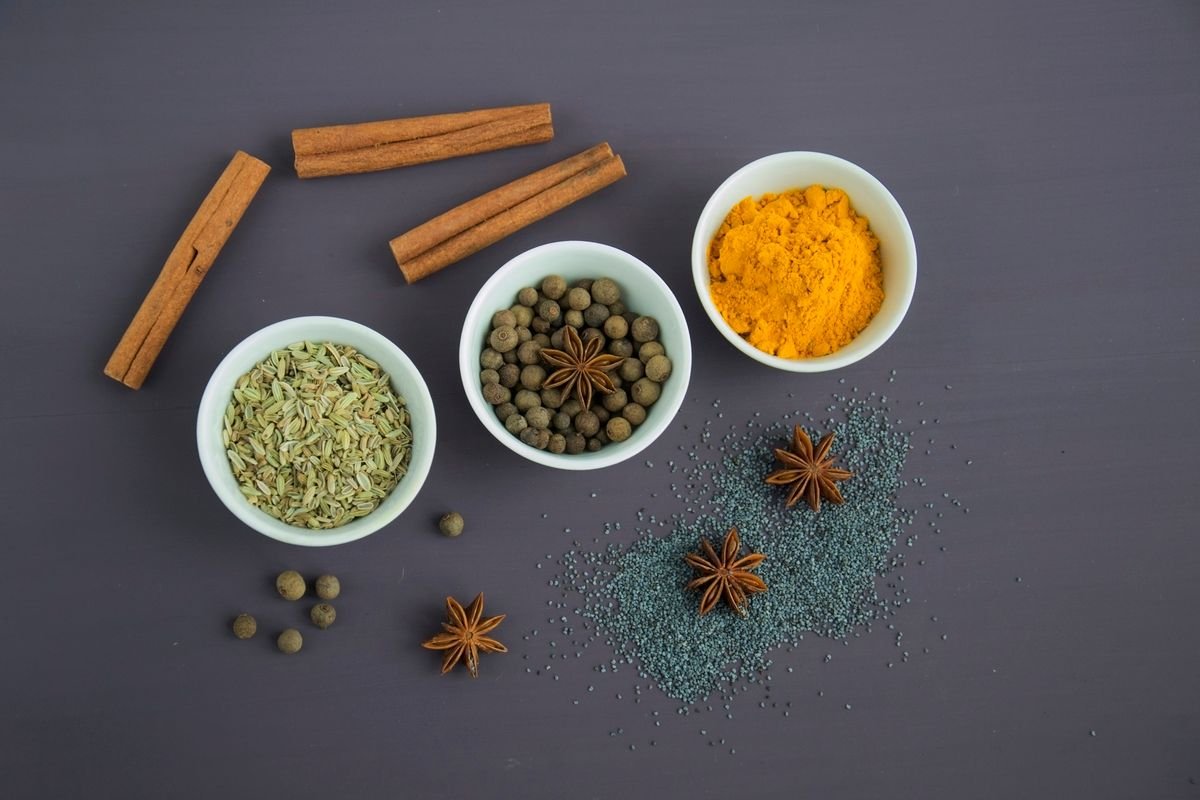
- Garam masala (South Asia) — a warming blend typically including cinnamon, cardamom, cloves, and cumin, though exact ratios vary significantly by household and region
- Ras el hanout (North Africa) — meaning roughly “top of the shop,” historically representing a spice merchant’s best blend, often containing dozens of individual spices
- Baharat (Middle East) — a warm, slightly sweet blend commonly including black pepper, cumin, coriander, and cinnamon, used across a wide range of savory dishes
- Shichimi togarashi (Japan) — a seven-spice blend built around chili pepper, often including citrus peel and sesame, used as a finishing seasoning rather than a cooking spice
- Adobo seasoning (Mexico and the Philippines, though notably distinct traditions) — demonstrating how the same term can represent entirely different blend philosophies depending on regional culinary history
Each of these blends represents generations of refinement, adjusted gradually based on locally available ingredients, trade history, and evolving household preferences passed down over considerable time.
Why Blend Ratios Are Rarely Written Down Precisely
In many culinary traditions, spice blend ratios exist primarily as inherited knowledge rather than a precisely measured, written recipe, passed down through direct demonstration within families rather than standardized documentation. This means genuine regional variation exists even within a single country, a garam masala blend from one region or even one specific family can differ meaningfully from another, both being entirely legitimate versions of the same broader tradition.
I learned this directly trying to recreate a specific dish from a friend’s family recipe, only to discover that “a bit of this, a pinch of that” genuinely meant exactly that, an intuitive, experience-based measurement rather than anything reducible to a precise written formula I could simply follow exactly.
How Trade History Shaped These Blends
Many iconic spice blends reflect centuries of trade routes and cultural exchange rather than purely local, isolated development. Historic spice trade networks moved specific spices across enormous distances, which is precisely why certain spices show up unexpectedly across seemingly unrelated culinary traditions, cinnamon appearing in both Middle Eastern and certain Latin American dishes, for example, tracing back to historical trade and colonial connections rather than coincidental independent discovery.
Toasting and Timing Matter as Much as the Ingredients Themselves
Beyond which specific spices go into a blend, when and how they’re prepared significantly affects the final flavor. Whole spices toasted briefly before grinding release considerably more aromatic complexity than pre-ground, shelf-stored versions of the same spices. Some blends are added early in cooking to infuse throughout a dish, others are added at the very end specifically to preserve brighter, more volatile aromatic qualities that would otherwise cook away during extended simmering.
Building Your Own Spice Blend Knowledge at Home
Starting to understand regional blends doesn’t require memorizing dozens of specific formulas immediately. Focusing on one or two traditions at a time, learning their characteristic base spices and common ratios, builds a genuinely transferable intuition that extends naturally to understanding related dishes within that same broader tradition.
Toasting and grinding whole spices fresh, rather than relying exclusively on pre-ground jars that lose potency over time, makes a noticeably larger difference in home cooking than most people initially expect, often more impactful than sourcing a rare or expensive specific ingredient.
Why This Understanding Changes How You Cook
Once the blend, rather than any single ingredient, becomes the primary focus, home cooking shifts from following recipes literally toward genuinely understanding flavor logic, why certain spices pair together, how ratios shift a dish’s character, which adjustments preserve authenticity versus which fundamentally change a dish’s identity. That shift in understanding tends to make cooking from unfamiliar cuisines feel considerably more approachable and less intimidating over time.
FAQ
Why do regional spice blend ratios vary so much, even within the same country?
Many spice blends are passed down through family tradition rather than standardized recipes, allowing genuine regional and even household-level variation to develop naturally over generations while still representing the same broader culinary tradition.
Does toasting whole spices before grinding really make a noticeable difference?
Yes, toasting whole spices releases considerably more aromatic complexity compared to using pre-ground spices that have lost potency during storage, often making a more noticeable difference than sourcing rare individual ingredients.
Can I substitute one regional spice blend for another in a recipe?
Not always successfully, since different blends are built around distinct flavor profiles and ratios. Understanding a blend’s core characteristics helps determine when a substitution might work reasonably well versus when it would fundamentally change a dish’s intended flavor.
What’s a good starting point for learning about regional spice blends?
Focusing on one or two specific traditions at a time, learning their characteristic base spices and common preparation methods, tends to build more transferable understanding than attempting to memorize many different blends simultaneously.
Conclusion
The next time a dish tastes distinctly like a specific place, it’s worth remembering that the magic rarely comes from one standout ingredient alone. It comes from a specific, often inherited combination, refined over generations, that turns a handful of common spices into something unmistakably tied to a particular kitchen, family, or region.